Introduction: Small Words, Big Financial Impact
A mortgage is one of the largest financial commitments most people will ever make. Yet surprisingly, many homeowners sign mortgage documents without fully understanding the key terms that determine how much they will pay over time.
You don’t need to be a mortgage expert—but knowing a few critical terms can save you thousands of dollars and help you make better decisions.
In this article, we’ll break down three essential mortgage terms every mortgage holder should understand, explained clearly and without confusing jargon.
1. Interest Rate vs. APR (Annual Percentage Rate)
At first glance, interest rate and APR look almost identical—but they are not the same thing.
Interest Rate
The interest rate is the percentage charged by the lender to borrow money. It directly affects:
- Your monthly payment
- How interest accrues over time
This is the number most borrowers focus on.
APR (Annual Percentage Rate)
APR tells a more complete story.
It includes:
- The interest rate
- Origination fees
- Discount points
- Certain closing costs
APR reflects the true cost of borrowing, expressed as a yearly rate.
Why This Term Matters
A loan with a lower interest rate but higher fees may actually cost more than a loan with a slightly higher rate and lower fees.
Mortgage holders should:
- Compare APRs when shopping loans
- Understand how long they plan to keep the loan
APR is especially important if you refinance frequently.
2. Amortization
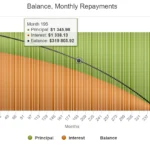
Amortization describes how your loan balance is paid down over time.
How Amortization Works
Mortgage payments consist of:
- Interest
- Principal
Early in the loan:
- Most of your payment goes toward interest
- Very little reduces the principal
Later in the loan:
- Interest decreases
- Principal reduction accelerates
This structure is called an amortization schedule.
Why Amortization Matters
Understanding amortization helps you:
- See why early payments feel “slow”
- Understand how extra payments reduce interest
- Make informed refinancing decisions
Small additional principal payments early can save significant interest over time.

3. Loan-to-Value Ratio (LTV)
Loan-to-Value (LTV) measures how much of your home’s value is financed.
How LTV Is Calculated
LTV = Loan Amount ÷ Property Value
Example:
- Home value: $300,000
- Loan amount: $240,000
- LTV = 80%
Why LTV Matters
LTV affects:
- Interest rates
- Loan approval
- Mortgage insurance requirements
- Refinancing options
Lower LTV generally means:
- Lower risk for lenders
- Better loan terms for borrowers
As you build equity, your financial flexibility improves.
How These Three Terms Work Together
These terms are connected.
- Interest rate and APR determine cost
- Amortization determines speed of equity growth
- LTV determines risk and flexibility
Understanding all three gives mortgage holders a clearer view of their financial position.
Common Mistakes Mortgage Holders Make
- Focusing only on the interest rate
- Ignoring how fees affect APR
- Not reviewing the amortization schedule
- Forgetting how LTV impacts refinancing options
Knowledge helps avoid costly surprises.
Final Thoughts: Knowledge Is Leverage
Mortgages don’t need to be confusing.
By understanding:
- Interest rate vs. APR
- Amortization
- Loan-to-Value
you gain control over one of your biggest financial obligations.
These three terms won’t just help you read your mortgage statement—they’ll help you make smarter decisions throughout the life of your loan.
Word Count:
505
Summary:
Getting a mortgage can be a very confusing process. There is a lot of paperwork to sign, documents to read and procedures to be followed. You’d think you were applying to go to Harvard or Yale, except they don’t require that much paperwork for you to be admitted!
Keywords:
mortgage
Article Body:
Getting a mortgage can be a very confusing process. There is a lot of paperwork to sign, documents to read and procedures to be followed. You’d think you were applying to go to Harvard or Yale, except they don’t require that much paperwork for you to be admitted! Although getting a mortgage can be a confusing process, there are three terms that every mortgage holder should know to better understand what he is she is getting into.
Going into a mortgage knowing just a few facts will help you immensely in understanding what type of commitment you are getting into.
The first term you should understand is, amazingly, the word “term”. Term refers to the length of the mortgage you are taking out – or the amount of time you are making payments.
Many mortgages run the gauntlet of between ten and thirty years. The longer the mortgage, typically the lower your monthly payment will be (and the more interest the mortgage company makes). Generally speaking, you should go for the shortest term you can comfortable afford – you’ll save potentially tens of thousands (and in some cases potentially over a hundred thousand) dollars in interest by keeping the length of the mortgage as short as you can.
Next, understand the interest rate on your mortgage and how it is calculated. The interest rate refers to the amount of interest charges you will pay for the money you are borrowing, expressed as a decimal – such as 5.2 for 5.2%. Is it fixed or adjustable? In other words, is it the same through the life of the loan or does it change at specified periods in time? Most home buyers should try and steer clear of adjustable rate mortgages even though they can look better up front. They can often reset to higher interest rates and come back to bite you if you aren’t ready for a jump in your monthly payments!
Finally, understand what closing costs are and how they are going to affect your purchase price. Often times, you are going to be responsible for coming up with these closing costs out of your own pocket. Closing costs consists of things such as appraisals done on the house, attorney fees, notary fee, deed fee – if there is a fee they can think of it usually falls under the term closing costs! Be a smart and savvy consumer, if you see a fee that you don’t understand or doesn’t seem right – speak up! Some mortgage lenders try to sneak in any fee they can think of to make a few extra dollars profit.
Understanding these three terms can help make you a more informed home buyer and help you find the mortgage that is right for you. As with any product, it is important to shop around for a mortgage when you are considering buying a house. Even a small change in the interest rate between two lenders can often to amount to thousands of dollars in savings. Don’t be afraid to comparison shop – it’s your money after all!


Tinggalkan Balasan